How to Raise Your Freelance Medical Writing Rates This Year
Why CME Writing Rates Require a Different Calculation

Summary: Raising your rates is not just a confidence exercise. It’s a business decision. This blog walks freelance continuing medical education writers through how to tell when their pricing no longer fits, what their work is actually costing them, why tax season can reveal underpricing, and how to raise rates in a way that supports a more sustainable business.
Like many freelancers, I operated my business as a single-member LLC for years and got taxed that way too. For a long time, I had no idea there was another option. My accountant never mentioned the possibility of electing S-corp tax status, and I didn’t know to ask. Looking back, I likely missed out on years of potential savings.
That's a good example of how opaque money can become when you're self-employed — and it's especially common in CME writing, where the business side of things rarely comes up in the training that brought most of us into the field. We learn needs assessment methodology. We learn how to write to learning objectives. We learn ACCME standards. But no one hands us a pricing framework on the way in.
So when I'm deep in the work itself, it's easier to postpone a rate review than to stop and ask whether the numbers still make sense. Raising rates might lead to client pushback or hard conversations. Better to table it until things slow down — except things never really slow down.
But at some point, we have to ask.
No one else is going to advocate for the health of your business the way you can. That means taking an honest look at whether your rates still reflect the time, energy, expertise, and overhead your work actually requires. It may not be the most exciting task on your list, but for freelance CME medical writers, it is one of the most consequential.
And if raising your rates feels daunting, that's because it is. This post breaks it down step by step so you can feel confident pricing your projects at rates you deserve.
BTW if you're new to CME writing and haven't yet set your first rate, the principles here still apply — but the starting point is different. This guide on how to become a CME writer walks through the foundational questions before pricing enters the picture. Start there, then come back.
The rate stagnation problem is bigger than you think.
In the recent MedComms 2026 Barometer, a global survey of freelance medical writers, 55% reported their rates stayed flat in 2025. Only 38% raised them — not because they felt their rates were fair, but because raising them felt too risky to attempt. If you've been sitting on a rate increase you know you need to make, you're not behind. You're in the majority. This post is about what it actually takes to move.
Market Rates Aren’t The Whole Story
While it can be useful to know what other people are charging for similar deliverables, market rates are not what we encourage you to base your pricing on in WriteCME Pro. If you’re trying to set or raise your freelance medical writing rates based only on what the current market rates seem to be, you aren’t answering the most important question, which is what your business needs to earn.
Two medical writers can charge very different rates and both be completely justified. One may have lower overhead, less administrative burden, and a simpler service model. The other may be running a more specialized business, paying higher expenses, or building in room for professional development and travel every year.
There's one more variable worth naming directly, and it's the one with the most significant impact on earning potential in this field: specialization. Freelance CME medical writers consistently report higher gross revenue than generalist medical writers — and the gap isn't explained by years of experience or hours worked. It's explained by the complexity and regulatory demands of CME work, and by the degree to which a writer has built expertise specific to that field. If you've been treating your CME work as a subset of your general medical writing practice, your rates may be reflecting that — even if your actual skill level doesn't.
(If you come from an academic or research background, your grant writing and evidence synthesis skills translate directly into CME needs assessment work — one of the highest-value and most underpriced competencies in the field. (More on that here.)
That complexity is also easy to underprice when you first set rates, because most of us learned to think about deliverables, not scope.
A CME activity isn't just content. It's a regulatory document. Every educational design decision has to align with ACCME criteria, commercial support standards, and the specific educational gaps identified in the needs assessment. The learning objectives you write aren't suggestions — they're the architecture the entire activity is built on, and they have to reflect adult learning principles that most clients couldn't articulate if you asked them to. When you revise, you're not just adjusting language. You're often navigating between what the commercial supporter wants to see, what the accredited provider will approve, and what will actually change clinical behavior. That triangulation takes expertise — and expertise takes time.
None of that complexity shows up in a word count. But it shows up in your hours, your cognitive load, and the quiet exhaustion of getting to the end of a project and realizing the fee made sense on paper but not in practice.
Inside WriteCME Pro, this is one of the first shifts we make. We do not start with “What do you think people will pay?” We start with baseline revenue needs. What does your business need to bring in? How much would you like to pay yourself each month? And, importantly, how will you reach that goal?
Not sure where you stand in CME writing - or what your next step should be?
Take the WriteCME Readiness Index and find out your next best step in just two minutes.
Signs it Might Be Time to Raise Your Freelance Writing Rates
When do you raise your rates? You might have heard that once a year is a good rule of thumb. In our quarterly reflections inside WriteCME Pro, we encourage members to check in with their rates and see if they still feel aligned. In that spirit, I’d encourage you to check in at least once a year and carve out intentional time to sit down with your rates. Here are a few signs it might be time to raise them.
Cost of living has increased
Many people will adjust their rates in accordance with the cost of living increase over the past year. This yearly rate adjustment is usually a small percentage. You can use the CPI Inflation Calculator to see how the average buying power has changed from year to year. The Social Security Administration usually publishes their own independent Cost of Living Adjustments, too. These are both useful metrics if you’re in the United States.
Why adjust for cost of living? Prices go up every year: groceries, insurance, the books you love to read in your downtime, and the business expenses that allow you to do good work for clients. If your prices don’t adjust accordingly, it will eventually become noticeable. Wherever you live, it’s easier to adjust in small percentages every year than it is to do one hefty rate hike.
You haven’t raised rates in a while
Similarly to adjusting for cost of living, if you haven’t raised rates in a year or more, you’re missing out on charging not only for a cost of living increase, but the experience you’ve gained in that time. Consider any professional conferences you’ve attended, training you’ve taken, and experience you’ve accumulated. This all adds value to the freelancer you are today.
The scope of work has changed
If you’ve been working with a client for a while, and the scope of work has gradually changed, it’s time to have an honest conversation about the value of the work you’re doing. Go into this conversation with a clear goal. If that goal is to raise your rates to match increased scope over time, be ready to walk away if the client doesn’t meet you. But in my experience, most of the clients with whom I have an established relationship, and certainly the ones worth working with, respect a modest rate increase.
Your rate makes it harder to say yes
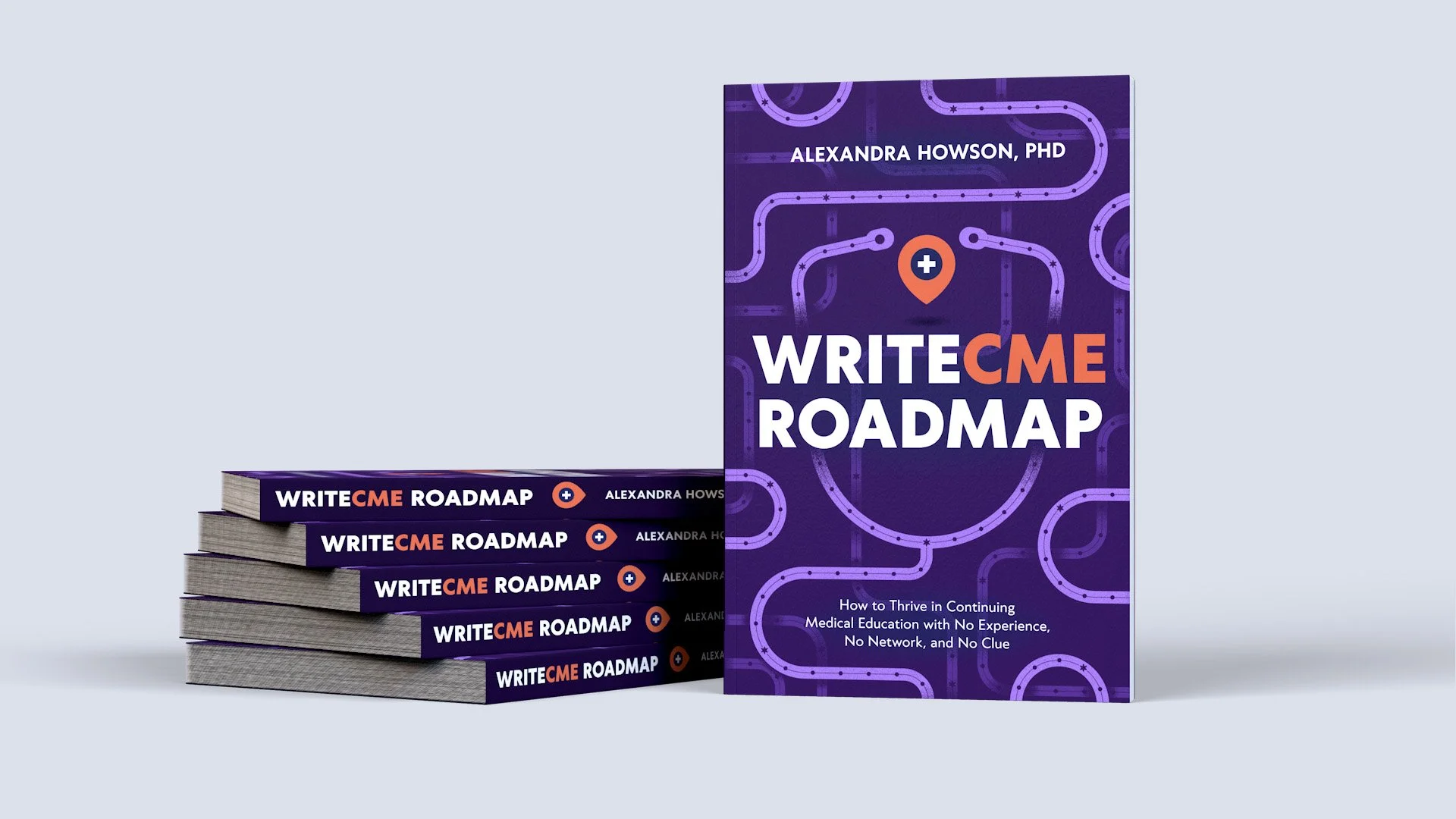
If the rates you’re currently quoting make it hard for you to say yes to projects, that’s a clear signal it’s time to raise them. If your rates are fostering resentment and stress because they’re so low — and you need more work than is sustainable at your current rate — than it’s time to raise them. As Austin Church asks in his book Free Money, what’s the rate that keeps a smile on your face while you do the work? Chapter 10 of my book, WriteCME Roadmap also provides more detail on pricing.
Assessing The Cost of Your Work
Here are key considerations when you’re looking at raising your rates.
Track your time, tasks, and energy
A lot of freelancers underprice because they are mentally billing for the part of the work that looks billable. But if a project takes five hours to write, ten hours to research, and involves five hours of client meetings, revisions, and emails, it is an twenty-hour project.
Pricing leaks are most likely to happen around things like follow-ups, organizing your sources, clarifying feedback, and other tasks that could be generally categorized as, “keeping the project moving.” They’re an essential part of our job as writers, and as such, it’s essential we consider the time these seemingly small tasks eat up when creating a quote and raising our rates, overall.
Lastly — and this one may vary from client to client — consider how much energy each project takes from you. Is the client easy to work with? Is the subject matter familiar? Is the turnaround reasonable?
The mental load, as well as the full scope of what your projects involve, should and needs to be considered for you to feel that you are being fairly compensated.
Don’t forget taxes and overhead
The other facet of assessing the cost of your work in the context of raising your current rates is how much you actually get to take home from each project. The dollar amount you charge a client is not your paycheck. It has to cover taxes, software, business expenses, retirement contributions, and possibly health insurance.
So your rate is doing a lot of heavy lifting, and it needs to leave room for more than your take home income in order for it to be a fee you can sustainably operate at.
Why Tax Season is a Good Time to Review Prices
Tax season is not fun, but it is clarifying. It is one of the few times of year when many freelancers look directly at the numbers. And this gives us a chance to get very clear on what may need to change.
If your rates don’t leave room for taxes, they are probably too low
If paying taxes throws your cash flow into chaos every year, that is a signal. If your project fees look decent until you remember what percentage of them is already spoken for, that is a signal too. A lot of freelancers do not consciously build taxes into their pricing year-round. They price the project, collect the payment, and deal with the tax reality later. If tax season is a time of year you dread, consider taking a hard look at your rates.
Your business structure can affect what your rates need to do
We all benefit when we understand how to ask the experts in our corner the questions that matter. Your business structure, tax election (sole proprietor vs. S-Corp), and overall financial setup can affect how your business runs and what your rates need to support.
That’s why I shared my story about not knowing I could be taxed as an S-corp. Not because everyone should rush to make the same decision, but because it illustrates that you can and should advocate for your business while working with an expert you trust.
Bring in a financial expert
On that note, it’s important to work with an expert you trust. Someone who will lay out all of your options, make the best decisions for your business, and be the subject matter expert when it comes to the way your money is working for you and your business. Consider a bookkeeper and a CPA for tax season as integral parts of a growing freelance business.
“There are a few reasons I recommend outsourcing bookkeeping to small business owners. Having your books done regularly can help you see if you’re profitable. Just because the number in your bank account is positive doesn’t mean you’re turning a profit. It also helps when tax season comes: you’re less likely to make mistakes or miss deductions if you have your books reconciled. Additionally, many business owners are going to elect to have their business have the legal designation of an LLC. That means it’s crucial to keep personal and business finances separate — and that’s easier to do when you have a bookkeeper tracking your cash flow, reviewing your financials, and helping you make informed business decisions.”
- Taylor Coyne, Coyne Bookkeeping
There’s More Than One Way to Raise Your Rates
Advice about how to raise rates can be rigid, as if there is one right way to do a rate increase. I don’t think that could be farther from the truth. If you want to raise your freelance medical writing rates, the best strategy depends on your business, your clients, your cash flow, and your tolerance for risk.
Option 1: Raise rates for new clients first
When this makes sense:
You want to test a higher rate with less risk
You want to protect existing relationships for now
You need a gentler transition
This can be a very smart move if you’re ready to increase your pricing but don’t want to completely overhaul your rates yet. It gives you room to see how people respond to your new rates, practice quoting at your new price point, and to build confidence.
Pro: You get to raise your freelance medical writing rates in a lower-pressure way. It is often easier psychologically, and it creates less immediate disruption.
Con: It can take longer to materially improve your revenue if your current clients still make up most of your workload.
Who this works best for: Writers who want momentum without a full pricing reset all at once.
Option 2: Raise rates across the board
When this makes sense:
Your pricing is broadly outdated
Your business has changed significantly
You need a reset across the board
If your rates are no longer sustainable, maintaining old pricing for the sake of comfort or because you don’t want to disrupt relationships with current clients can keep you stuck longer than necessary. That’s when doing rate raises for everyone can make the most sense.
Pro: It is simple, clear, and aligned. You are no longer maintaining one price for legacy clients and another for everyone else.
Con: This may feel less safe. Clients you’ve been with for some time may push back, pause your work, or leave — and then it becomes imperative to maintain your ground.
Who this works best for: Writers who are ready to take a slightly higher risk in order to keep and find clients at a rate that genuinely sustains them.
Option 3: Take a client-by-client approach
When this makes sense:
Some clients are profitable and others are not
Some relationships are worth preserving at a slower pace
You want more nuance in how you update pricing
For many freelancers, this can feel like the most realistic option. For most of us, a handful of clients are easy to work with, profitable, and aligned. Others are simply no longer a fit for where your business is going.
Pro: You can make more strategic decisions based on the specific reality of individual client situations instead of forcing one blanket policy across very different relationships.
Con/Consideration: It requires discernment. If you are not clear on your criteria, this strategy can turn into avoidance.
Who this works best for: The writer who needs to raise rates for both new and legacy clients, but genuinely feels like each client is different enough that approaches #1 and #2 just aren’t applicable.
The Real Reason Many Freelancers Avoid Raising Their Rates
A lot of hesitation around raising rates sounds practical on the surface. What’s a fair increase? Will the new rate be too high? Is this percentage of a raise too much?
But underneath those questions is often something deeper: a sense of psychological risk. What if someone says no? What if I lose the work? What if raising my rates changes how clients see me?
This is a confidence problem, not a knowledge problem.
You know you're undercharging. What you don't have yet is the evidence base that makes asking for more feel justified — the track record of completed projects, the client feedback, the institutional fluency that comes from knowing exactly what CME writing requires and being able to articulate it. Without that, a higher rate feels like a claim you can't back up. So you hedge. You set a number that feels harder to reject. And the cycle continues.
Here's what that cycle actually looks like: uncertainty about your own competence leads to underpricing. Underpricing leads to resentment — the quiet kind, the kind that shows up at hour six of a project you quoted for three. Resentment leads to under-delivery, or at least to doing the work in a state of exhaustion that doesn't reflect what you're capable of. And under-delivery feeds the original uncertainty. Maybe I'm not ready to charge more after all.
The writers who break this cycle don't do it by getting braver. They do it by getting clearer. Confidence follows competence — and competence, in CME writing specifically, means building a real evidence base: understanding the regulatory landscape, learning how to design education that actually changes clinical behavior, and accumulating enough project experience that a higher rate feels like a statement of fact rather than an act of faith.
This is exactly the shift Néstor Zumaya made. A physician and CME writer, Néstor didn't change his rates by deciding to take a risk — he changed them by building the professional foundation that made a higher rate feel defensible, to himself and to clients. You can read his story here.
The mental load piece is also real. Even when you know it's time, the process can feel like a lot. You have to sit down with your numbers, figure out what makes sense, decide how much to raise, and communicate it to clients. My suggestion: break it down. Write out every step, then turn one overwhelming task into a series of smaller, more manageable ones. The goal isn't a single act of courage. It's a series of small decisions that compound.
Build a Business That Works for You in WriteCME Pro
Your Rates Are a Business Decision. Treat Them Like One.
Raising your rates isn't a single act of courage. It's a series of small decisions that compound — a rate review you actually schedule, a number you commit to, an email you send before you talk yourself out of it.
The writers who get there aren't necessarily braver than the ones who don't. They're clearer. Clearer on what their work actually costs. Clearer on what their business needs to earn. Clearer on the expertise they've built and what it's worth to the clients who need it.
If you're ready to get clearer — on your rates, your positioning, and what a sustainable CME writing business actually looks like — that's exactly what we work on inside WriteCME Pro.
Take the WriteCME Readiness Index to find out where you stand and what to focus on next. It's free and takes two minutes. If you're ready to go deeper, explore WriteCME Pro — curriculum, Practice Labs, and a community of CME writers building businesses that work.
FAQs about Raising Your Freelance CME Writing Rates
I'm figuring out how to become a CME writer and haven't set rates before. Where do I start?
Start with what your business needs to earn — not with what you think the market will accept. Fear-based pricing and experience-discounted rates both lead to the same outcome: rates that are hard to sustain and harder to raise. Your clinical background, research skills, and subject matter expertise all have real market value in CME writing. Price from that foundation, not from the assumption that you have to earn credibility before you can charge for it.
The WriteCME Readiness Index can help you identify where you are and what to focus on next — including how to position your clinical experience when you're quoting for the first time.
I need to raise my rates, but I’m not sure any of my prospective clients will meet me at my new prices. What should I do?
Raise them anyways. Often, our fear of making reasonable rate adjustments comes from our body trying to avoid the perceived risk associated with asking for what our work is worth. There’s no easy “fix” to that. But you can do what I told one of my mentees to do: Take a deep breath. Write the email. Send the quote. Take a walk. BTW, this approach got a yes in three minutes.
The clients worth working with will accept your rates in exchange for your excellent work — and over time, you’ll build more confidence in asking for what you’re worth.
Does WriteCME Pro offer structured help with pricing my CME writing services and negotiating contracts with CME providers?
Yes. We help you set revenue goals and discuss pricing strategies and fee-setting for projects using practical tools and case studies that you can apply to your business right away with peer and mentor feedback.
How does WriteCME Pro help me find and pitch clients that are actively seeking CME writers? Are there scripts, templates, or outreach plans?
Yes! Within WriteCME Pro, we teach you how to qualify clients, position your services, establish authority in your niche, and help you create your own marketing plan with peer and mentor feedback so you can find prospective clients, build relationships, and start your first CME project.
What can I do today to be financially prepared for the future as a freelancer?
Frank Randall, a financial planner with MedProFinancials, talked to WriteCME Pro members in 2025. His framework includes four key financial pillars—organization, protection, cash flow, and investment planning. Here’s what he recommends.
Immediate Actions:
Set up a brokerage account separate from your bank (e.g., Fidelity, Vanguard).
Split your direct deposit to send 10% or more to your brokerage account.
Contact your insurance provider to ask about an umbrella policy.
Audit current protection (disability, life, legal documents) and identify gaps.
Frank’s Four Financial Rules:
Protect your today: Prioritize emergency funds, insurance, and legal documents.
Be a world-class saver: Aim to save 15–20% of income (outside of bank savings).
Build liquidity: Ensure access to cash for emergencies and opportunities.
Eliminate debt and reduce taxes: Use strategies like Roth accounts, refinancing, and annual lump sum payments to manage obligations smartly.